Reciprocal Imitation Training Manual: A Comprehensive Guide
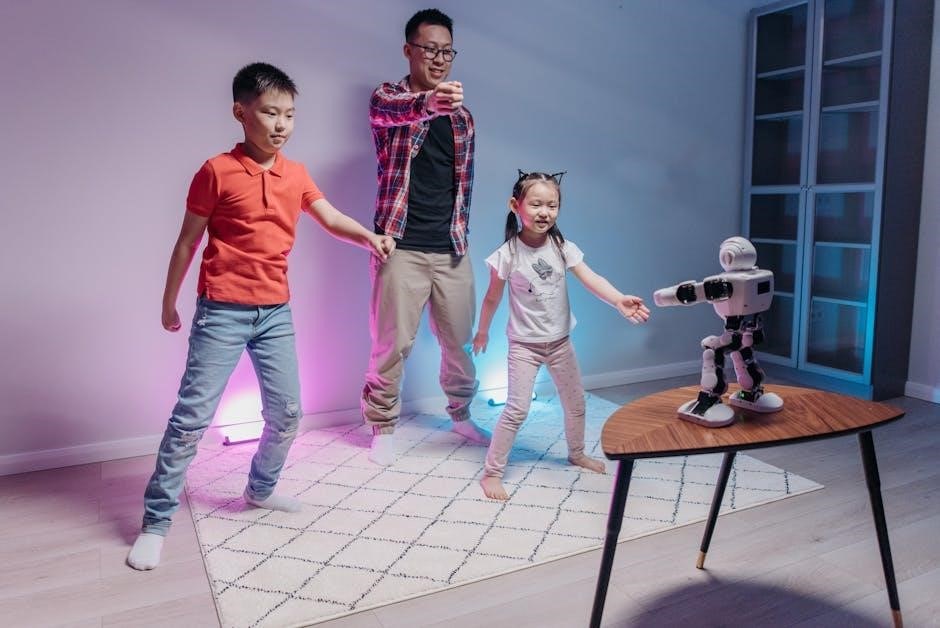
This manual details Reciprocal Imitation Training (RIT), a technique utilizing modeling, demonstration, and guided practice. It’s designed for diverse populations,
leveraging imitation for skill acquisition,
particularly in contexts like autism and motor skill development.
Reciprocal Imitation Training (RIT) is a highly structured, evidence-based intervention rooted in the principles of applied behavior analysis. It’s a teaching strategy designed to facilitate skill acquisition across a wide range of learners, particularly those facing developmental challenges. Unlike traditional imitation training, RIT emphasizes a shared learning experience – a ‘reciprocity’ – between the trainer and the learner.
At its core, RIT involves a cyclical process of modeling, imitation, and feedback. The trainer initiates by demonstrating a target skill, then prompts the learner to imitate the action. Crucially, the learner isn’t simply expected to copy; they are actively guided through the process with varying levels of assistance. This assistance is systematically faded as the learner gains proficiency, promoting increasing independence.
RIT’s versatility makes it applicable to numerous skill domains, including communication, social interaction, daily living skills, and motor abilities. It’s particularly recognized for its effectiveness with individuals on the autism spectrum, where imitation deficits are often observed. The structured nature of RIT provides a predictable and supportive learning environment, fostering success and building confidence.
The Theoretical Foundations of RIT
Reciprocal Imitation Training (RIT) draws heavily from several key theoretical frameworks. Behaviorism, particularly the work of Albert Bandura on social learning theory, provides a cornerstone, emphasizing learning through observation, modeling, and reinforcement. Imitation is viewed as a learned behavior, strengthened by positive consequences and guided practice.
Developmental psychology informs our understanding of how imitation skills emerge and develop typically. RIT acknowledges that imitation isn’t simply a reflexive act, but a complex cognitive process involving perception, motor planning, and understanding of intentions. Deficits in these areas can hinder skill acquisition, making a structured approach like RIT essential.
Furthermore, dynamic systems theory highlights the interplay between multiple factors – cognitive, behavioral, and environmental – in shaping skill development. RIT recognizes that learning isn’t linear; it’s a dynamic process of adaptation and refinement. The reciprocal nature of the training allows for adjustments based on the learner’s evolving abilities, optimizing the learning trajectory.
Finally, principles of applied behavior analysis (ABA), such as discrete trial training and prompting, are integrated into RIT to ensure effective and systematic skill instruction.
Core Principles of Effective Imitation
Effective imitation, the bedrock of Reciprocal Imitation Training (RIT), hinges on several core principles. Attention is paramount; the learner must focus on the model’s actions. This is fostered through minimizing distractions and ensuring clear visual access. Retention – remembering the observed behavior – is enhanced by repetition and breaking down complex skills into smaller, manageable steps.
Motor reproduction, the ability to physically replicate the action, requires adequate motor skills and practice. RIT provides guided support to facilitate accurate reproduction. Crucially, motivation plays a vital role. Learners are more likely to imitate behaviors they find rewarding or relevant.
Beyond these foundational elements, reciprocity – the back-and-forth interaction between learner and trainer – is central. This isn’t simply mimicking; it’s a collaborative process where the learner actively participates and receives feedback. Prompting, carefully designed cues, assists the learner when needed, while shaping gradually refines the imitated behavior towards the desired outcome.
Finally, generalization – applying the learned skill in different contexts – is a key goal, requiring varied practice settings and stimuli.
Identifying Target Skills for RIT
Selecting appropriate target skills is crucial for successful Reciprocal Imitation Training (RIT). Begin with a comprehensive assessment to pinpoint areas where the learner experiences difficulty. Prioritize skills that are functional – those directly impacting daily life and independence – such as dressing, eating, or basic communication.
Consider skills that form prerequisites for more complex abilities. For example, before teaching a complex cooking task, focus on imitating simpler actions like stirring or pouring. Break down complex skills into smaller, discrete steps. This makes the learning process more manageable and increases the likelihood of success.
Observe the learner’s current abilities. Identify skills they partially demonstrate, as these are excellent starting points for RIT. Skills should be observable and measurable, allowing for objective tracking of progress. Furthermore, consider the learner’s interests and preferences; targeting skills they enjoy increases motivation.
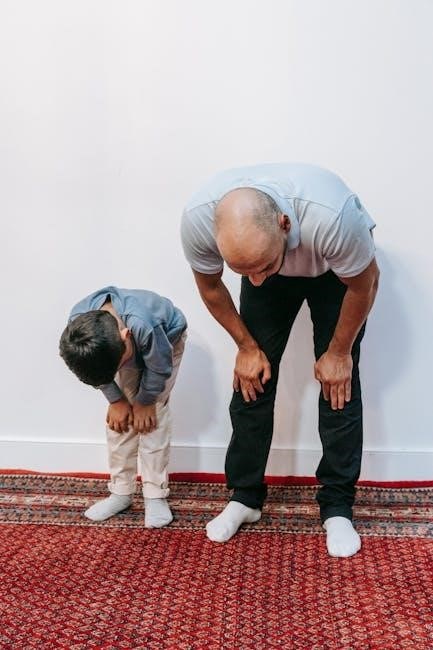
Finally, ensure the chosen skills are realistic and achievable within the scope of the training. A phased approach, starting with easier skills and gradually increasing complexity, is often most effective.
Phase 1: Initial Assessment and Skill Breakdown
Phase 1 centers on thorough evaluation and deconstruction of the target skill. Begin with a baseline assessment to determine the learner’s current imitation abilities and identify specific areas needing support. This can involve observing spontaneous imitation during play or structured tasks.
Next, break down the chosen skill into its component parts – the individual steps required for successful completion. This process, known as task analysis, creates a clear roadmap for instruction. Each step should be small, manageable, and observable. For instance, “washing hands” breaks down into “wet hands,” “apply soap,” “rub hands,” and “rinse hands.”
Document each step clearly, potentially using a checklist or video recording. This documentation serves as a guide during the training process. Identify any prerequisite skills needed for each step; address these before proceeding. Consider the learner’s physical and cognitive abilities when determining the level of detail in the task analysis.
Finally, establish a data collection system to track progress throughout the training. This will inform adjustments to the intervention as needed.
Phase 2: Modeling and Demonstration
Phase 2 focuses on clear and effective modeling of the target skill. The trainer demonstrates each step of the task analysis, emphasizing accuracy and clarity. Maintain eye contact with the learner and use a slow, deliberate pace, especially when introducing new steps. Verbal cues can accompany the demonstration, describing the action as it’s performed – “Now, I am picking up the block.”
Minimize distractions during modeling to maximize the learner’s attention. Consider using video modeling as a supplement, allowing the learner to observe the skill repeatedly. Vary the model if possible, using different trainers or perspectives to promote generalization.
Ensure the demonstration is within the learner’s physical and cognitive capabilities. Adapt the complexity of the model based on their current skill level. Provide opportunities for the learner to ask questions before proceeding to imitation. The goal is to create a clear mental representation of the desired skill.
Repeat the demonstration several times, allowing the learner to observe the entire sequence before attempting it themselves.
Phase 3: Reciprocal Imitation – The Core Process
Reciprocal Imitation is the heart of the training, involving a collaborative exchange between trainer and learner. The trainer initiates a portion of the skill, then pauses, prompting the learner to complete the action. This “hand-over-hand” approach provides physical guidance initially, gradually reducing assistance as the learner gains competence.
The trainer’s role is to provide just enough support to ensure success, avoiding complete physical prompting which can hinder independent learning. Verbal cues like “Your turn” or “Now you try” signal the transition. Observe the learner’s response closely, noting any errors or difficulties.

Maintain a positive and encouraging atmosphere. Celebrate small successes and provide constructive feedback. Adjust the level of prompting based on the learner’s performance – increasing assistance if needed, decreasing it when they demonstrate mastery. The goal is to create a shared experience of success.
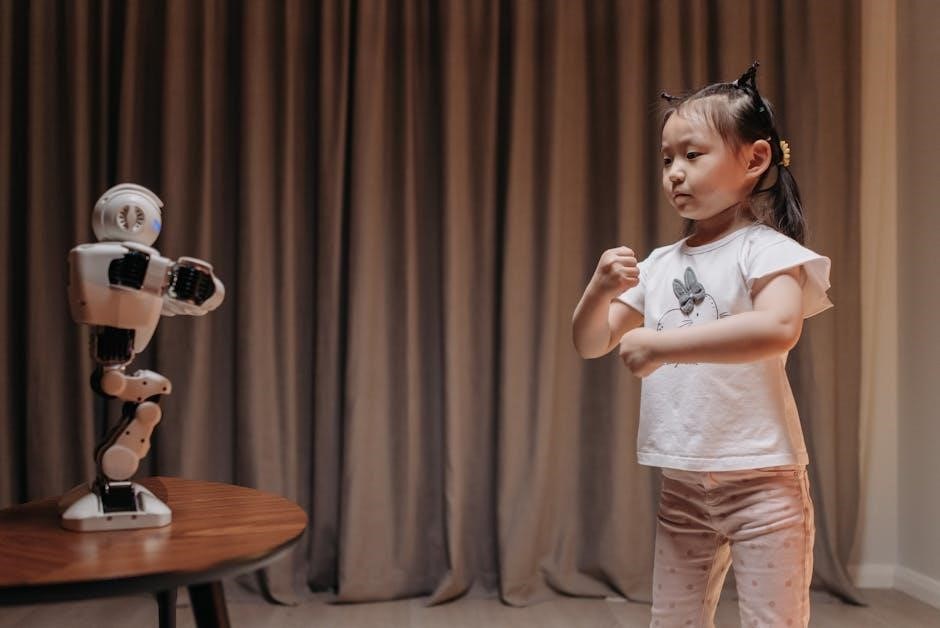
Focus on the quality of the imitation, not just completion of the task.
Step-by-Step Guide to Reciprocal Imitation
Step 1: Initiate the Action. The trainer begins the target skill, performing the initial part with clear, deliberate movements. Maintain eye contact with the learner throughout.
Step 2: Pause and Prompt. Stop mid-action, creating a natural pause point; Simultaneously, provide a verbal cue like “Now you,” or a gentle physical prompt to encourage the learner to continue.
Step 3: Provide Assistance. Offer the minimum level of physical assistance needed for successful completion. This might involve guiding a hand, stabilizing a limb, or providing slight pressure.
Step 4: Observe and Adjust. Carefully monitor the learner’s response. If they struggle, increase assistance slightly. If they succeed, gradually reduce your support on subsequent trials.
Step 5: Repeat and Refine. Continue the reciprocal exchange, alternating between trainer initiation and learner completion. Focus on smooth transitions and accurate imitation. Reinforce correct responses with praise and encouragement.
Step 6: Gradually Fade Support. As the learner’s skill improves, systematically reduce physical prompts, relying more on verbal cues and self-initiation.

Prompting Strategies in RIT
Physical Prompts: These involve tactile guidance, ranging from full physical assistance (hand-over-hand) to partial physical guidance (touching the elbow). Gradually fade these as the learner gains competence.
Verbal Prompts: Utilize clear, concise instructions. Examples include “Now you turn the knob,” or “Remember to push.” Vary the specificity of prompts – start with more detailed cues and fade to general reminders.
Gestural Prompts: Employ pointing, modeling, or head nods to direct the learner’s attention or indicate the desired action. These are less intrusive than physical prompts.
Visual Prompts: Use pictures, videos, or demonstrations to illustrate the target skill. These can be particularly helpful for visual learners.
Prompt Hierarchy: Implement a systematic approach, starting with the most intrusive prompt (full physical) and progressively fading to the least intrusive (independent performance). Data collection is crucial to track prompt fading.
Errorless Learning: Prioritize preventing errors by providing sufficient prompting. This builds confidence and avoids reinforcing incorrect responses. Adjust prompting levels based on individual needs.
Phase 4: Fading Prompts and Promoting Independence
Systematic Fading: This phase centers on gradually reducing the level of assistance provided during RIT sessions. Begin by fading the most intrusive prompt used – typically physical prompts – before moving to verbal or gestural cues.
Data-Driven Decisions: Prompt fading should be guided by ongoing data collection. Monitor the learner’s success rate at each prompt level. Reduce assistance only when consistent, independent performance is observed.
Delaying Prompts: Introduce a brief delay before offering a prompt. This encourages the learner to attempt the skill independently, fostering self-initiation.
Least-to-Most Prompting: Start with the least intrusive prompt and escalate only if the learner struggles. This minimizes reliance on assistance.
Transfer of Stimulus Control: Generalize skills across settings and individuals. Have the learner imitate different models and perform the skill in varied environments.
Reinforcement: Continue providing positive reinforcement for independent attempts and successful completion of the skill, even with minimal prompting. Celebrate progress!
Error Correction Techniques in RIT
Prioritize Prevention: Proactive strategies are key. Ensure clear modeling, break down skills into smaller steps, and provide sufficient prompting to minimize errors initially.
Gentle Correction: When errors occur, avoid harsh reprimands. Instead, offer gentle, constructive feedback. Focus on what the learner can do correctly.
Recast & Re-Model: Immediately after an error, re-model the correct response. Encourage the learner to imitate the corrected version. This provides a fresh opportunity for learning.
Partial Reinforcement: Intermittently reinforce correct responses, even after an error correction. This maintains motivation and encourages continued effort.
Errorless Learning: For learners struggling significantly, implement errorless learning procedures. Provide prompts before errors occur, ensuring success with each attempt.
Analyze Error Patterns: Identify recurring errors to pinpoint specific areas needing further instruction or prompt adjustments. Data collection is crucial here.
Positive Framing: Frame corrections positively. Instead of saying “That’s wrong,” try “Let’s try it this way…”
Adapting RIT for Different Populations
Neurotypical Individuals: RIT can enhance skill acquisition in any population. For neurotypical learners, focus on complex skills, minimizing prompts quickly to foster independence and challenge them.
Autism Spectrum Disorder (ASD): RIT is particularly effective for individuals with ASD, leveraging their often-strong visual learning strengths. Break down tasks into very small steps, provide consistent modeling, and utilize visual supports.
Motor Skill Deficits: Adapt RIT for motor skill acquisition by focusing on precise movements. Use hand-over-hand prompting initially, gradually fading to gestural or verbal cues. Consider task simplification.
Cognitive Impairments: For individuals with cognitive impairments, simplify the modeled tasks significantly. Use concrete examples and provide frequent reinforcement. Patience and repetition are vital.
Language Delays: RIT can support language development. Model desired verbalizations alongside actions, encouraging imitation of sounds and words. Pair verbal prompts with visual cues.
Cultural Sensitivity: Be mindful of cultural norms when selecting modeled behaviors. Ensure the skills taught are relevant and appropriate for the individual’s cultural background.
RIT for Autism Spectrum Disorder
Leveraging Strengths: Individuals with Autism Spectrum Disorder (ASD) often exhibit strong visual learning capabilities and a tendency towards rote learning, making them excellent candidates for RIT. The structured nature of RIT provides predictability and reduces anxiety.
Skill Selection: Prioritize skills that enhance social interaction, communication, and daily living. Examples include initiating greetings, requesting items, or completing self-care routines. Begin with skills slightly above the individual’s current level.
Task Breakdown: Decompose complex skills into discrete, manageable steps; This simplifies the learning process and reduces cognitive overload. Visual schedules and prompts can further support understanding.
Modeling & Prompting: Provide clear, concise modeling of each step. Initially, use full physical prompting, gradually fading to gestural, verbal, and eventually, independent performance. Consistency is key.
Reinforcement: Utilize positive reinforcement to motivate and reward successful imitation. Identify preferred reinforcers and deliver them immediately following correct responses.
Individualization: Tailor RIT sessions to the individual’s specific needs, interests, and sensory sensitivities. Adapt the environment and materials to promote engagement and minimize distractions.
RIT for Motor Skill Acquisition
Enhancing Coordination: Reciprocal Imitation Training proves highly effective in acquiring novel motor skills, benefiting individuals recovering from stroke, cerebral palsy, or those learning sports techniques. The mirroring aspect activates motor neurons, facilitating learning.
Skill Analysis: Break down the target motor skill into its fundamental components. For example, a throwing motion involves stance, arm swing, and release. This detailed analysis guides the training process.
Demonstration & Observation: A skilled practitioner demonstrates the skill slowly and clearly, allowing the learner ample opportunity for observation. Verbal cues highlighting key movements are beneficial.
Guided Practice: The learner attempts to imitate the demonstrated skill, receiving immediate feedback and physical assistance as needed. The practitioner gently guides the learner’s movements.
Error Correction: Address errors promptly and constructively. Provide specific feedback focusing on the incorrect movement and offer corrective guidance. Avoid overwhelming the learner with too much information.
Progressive Fading: Gradually reduce the level of physical assistance as the learner gains proficiency. Transition from full physical guidance to partial assistance, then to verbal cues alone.
Repetition & Refinement: Consistent practice and repetition are crucial for skill consolidation. Encourage the learner to refine their technique through continued imitation and feedback.

Measuring Progress and Evaluating RIT Effectiveness
Establishing Baseline Data: Before initiating RIT, establish a clear baseline of the target skill. This involves quantifying the learner’s current ability through observation, checklists, or standardized assessments. Accurate baseline data is crucial for tracking progress.
Data Collection Methods: Employ various data collection methods throughout the training process. These include frequency counts of successful imitations, error analysis, and qualitative observations of the learner’s engagement and effort.
Visual Representation: Utilize graphs and charts to visually represent the learner’s progress over time. This allows for easy identification of trends and patterns in skill acquisition. Regular data visualization enhances monitoring.
Objective vs. Subjective Measures: Combine objective measures (e.g., task completion time, accuracy rate) with subjective measures (e.g., learner self-report, caregiver observations) for a comprehensive evaluation.

Treatment Fidelity: Ensure the RIT protocol is implemented consistently and accurately. Monitor adherence to the core principles and prompting strategies to maintain treatment fidelity.
Long-Term Maintenance: Assess the learner’s ability to maintain the acquired skill over time. Conduct follow-up assessments to determine the durability of the training effects.
Individualized Adjustments: Regularly review the data and make individualized adjustments to the RIT protocol as needed. Adapt the training based on the learner’s unique needs and progress.