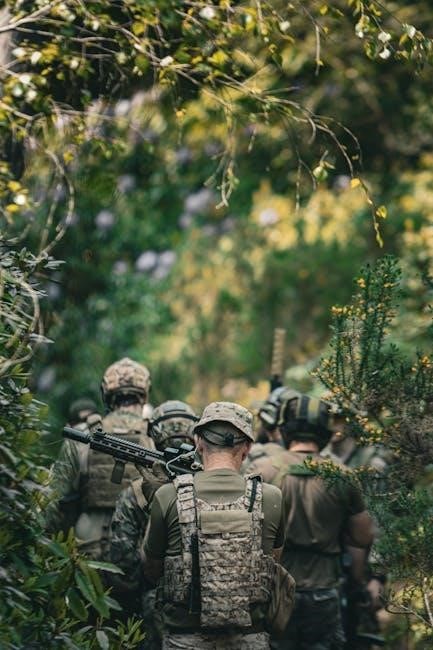
Small unit tactics represent the foundational building blocks of military operations, detailed in resources like the SUTS2 and illustrated manuals available today.
These tactics, consistently employed across global armies, focus on effectively utilizing squads and platoons in diverse combat scenarios, as highlighted by veteran insights.
Understanding these principles, supported by doctrine updates (ADP/ADRP 3-90, 5-0, 6-0), is crucial for successful planning and execution of tactical maneuvers.
Defining Small Unit Tactics
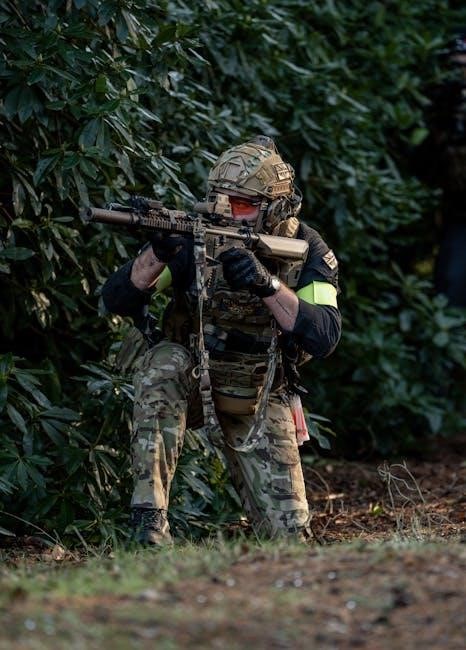
Small unit tactics encompass the coordinated employment of military forces at the squad, platoon, or company level to achieve specific objectives. These tactics, meticulously documented in resources like the Small Unit Tactics SMARTbook (SUTS2) and various illustrated manuals, prioritize decentralized execution and adaptability.
They are characterized by fire and movement, a core doctrine universally recognized across armies, as evidenced by discussions on platforms like Reddit’s r/WarCollege. Effectively, these tactics translate battlefield doctrine into practical application for soldiers on the ground.
The focus is on leveraging terrain, utilizing cover and concealment, and employing maneuvers like patrolling, ambushes, and raids – all detailed within comprehensive tactical manuals. These principles are designed to maximize combat effectiveness while minimizing casualties, forming the bedrock of modern warfare.
Importance of Small Unit Tactics in Modern Warfare
Small unit tactics remain critically important in modern warfare due to the increasingly complex and decentralized nature of conflict. While technology plays a significant role, success often hinges on the ability of small teams to operate effectively in dynamic environments, as emphasized in resources like the SUTS2.
These tactics are foundational for achieving objectives in diverse operational settings, from urban combat to counter-insurgency, requiring adaptability and proficiency in core maneuvers like patrolling and ambushes.
Understanding and mastering these principles, detailed in manuals by veterans and aligned with current doctrine (ADP/ADRP 3-90, 5-0, 6-0), ensures units can exploit opportunities and mitigate risks, ultimately contributing to broader strategic goals. Their proven effectiveness transcends national armies.
Core Principles of Small Unit Tactics
Core principles encompass fire and movement, mission command, and understanding the operations process – vital for effective small unit operations, as detailed in modern doctrine.
Fire and Movement
Fire and movement is a fundamental tactical maneuver, consistently utilized by armies worldwide due to its proven effectiveness in engaging and suppressing the enemy. This doctrine involves one element delivering suppressive fire while another maneuvers to gain a positional advantage or close with the enemy.
Effective implementation requires synchronized actions, clear communication, and disciplined fire control. The SMARTbook (SUTS2) and illustrated manuals emphasize the importance of understanding different fire techniques – direct, indirect, and suppressive – and coordinating them with movement.
Successful fire and movement allows small units to overcome obstacles, exploit enemy weaknesses, and achieve tactical objectives, forming a cornerstone of offensive and defensive operations.
Mission Command
Mission Command, as detailed in ADP/ADRP 6-0, is a vital principle underpinning successful small unit tactics. It emphasizes empowering subordinate leaders with the freedom to exercise initiative and independent judgment within the commander’s intent.
This approach fosters decentralized decision-making, enabling rapid adaptation to changing battlefield conditions. Resources like the SUTS2 highlight the importance of clear communication of the commander’s vision, coupled with trust in subordinate capabilities.
Effective Mission Command requires disciplined initiative, mutual trust, and a shared understanding of the operational environment, ultimately enhancing unit cohesion and operational effectiveness in complex scenarios.
Understanding the Operations Process
Understanding the Operations Process, as outlined in ADP/ADRP 5-0, is fundamental to effective small unit tactics. This cyclical process – Plan, Prepare, Execute, and Assess – provides a framework for analyzing missions and coordinating actions.
The SUTS2 emphasizes that thorough planning, incorporating terrain analysis and enemy assessments, is crucial for success. Preparation involves rehearsals and logistical arrangements, while execution demands adaptability and decisive action.
Continuous assessment of results informs adjustments to the plan, ensuring alignment with the commander’s intent. Mastering this process, alongside resources like illustrated manuals, enables small units to achieve objectives efficiently and effectively.
Essential Tactical Maneuvers
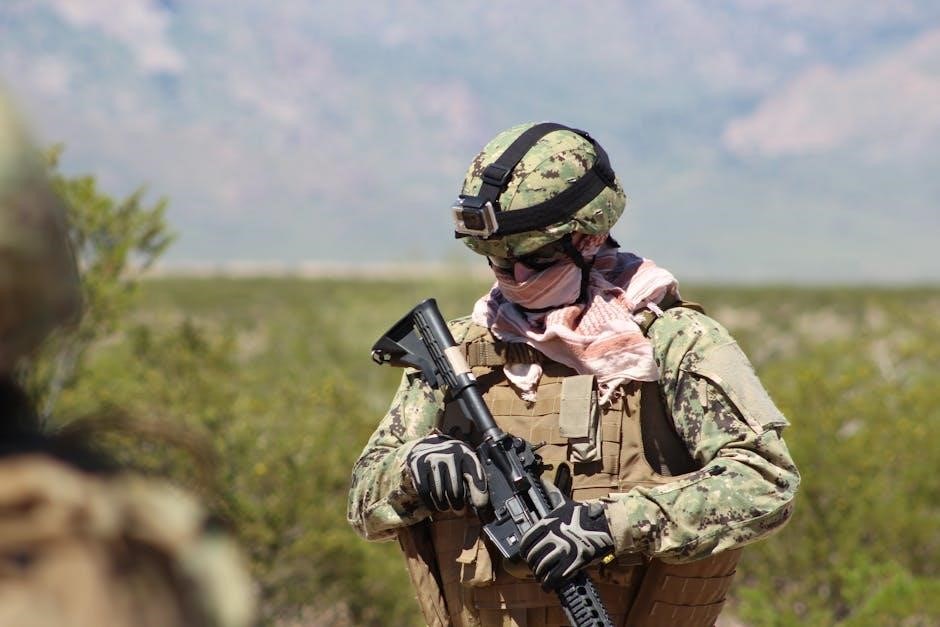
Essential tactical maneuvers, like patrolling, ambushes, and raids, form the core skillset for small units, detailed in manuals and training resources available today.
Proficiency in these techniques, honed through practical application, is vital for mission accomplishment and maintaining battlefield superiority.
Patrolling Techniques
Patrolling is a fundamental small unit tactic, crucial for gathering information, reconnaissance, and maintaining security within an assigned Area of Operations (AO). Effective patrols require meticulous planning, considering terrain analysis and potential enemy activity, as emphasized in tactical manuals.
Leaders must prioritize protection, utilizing terrain for cover and concealment, and anticipating potential ambush locations based on historical data and enemy patterns. Different patrol formations – wedge, vee, column, and echelon – are employed based on the mission and environment.
Communication, observation, and reporting are paramount; patrols must diligently scan their surroundings, identify key terrain features, and relay accurate information back to headquarters. Proficiency in patrolling significantly enhances a unit’s situational awareness and overall operational effectiveness, as detailed in resources like the SUTS2.
Ambush Procedures
Ambush procedures are critical offensive tactics employed by small units to inflict casualties, disrupt enemy operations, and gather intelligence. Successful ambushes require detailed planning, precise execution, and a thorough understanding of the target’s predictable patterns and routes.
Key elements include selecting a suitable ambush site offering concealment and fields of fire, establishing clear rules of engagement, and coordinating the assaulting elements. The ambush typically progresses through phases: infiltration, initiation, execution, and exfiltration.
Leaders must emphasize fire discipline, target prioritization, and rapid withdrawal to avoid counterattack. Terrain analysis is vital, identifying potential enemy approach routes and escape avenues. Resources like the Small Unit Tactics SMARTbook provide comprehensive guidance on ambush techniques and best practices for maximizing effectiveness.
Raids and Assaults
Raids and assaults represent aggressive, offensive actions conducted by small units to achieve specific objectives, ranging from capturing key personnel to destroying critical infrastructure. These operations demand meticulous planning, synchronized execution, and overwhelming combat power at the point of attack.
Raids typically involve a swift in-and-out operation, while assaults focus on seizing and securing a defended position. Key considerations include selecting breach points, establishing supporting fire positions, and coordinating the assaulting elements’ movement.
Effective communication, clear objectives, and contingency planning are paramount. Resources like tactical manuals and the SUTS2 emphasize the importance of rehearsals and detailed intelligence preparation. Successful raids and assaults require decisive leadership and the ability to adapt to changing battlefield conditions.
Terrain Analysis and its Impact
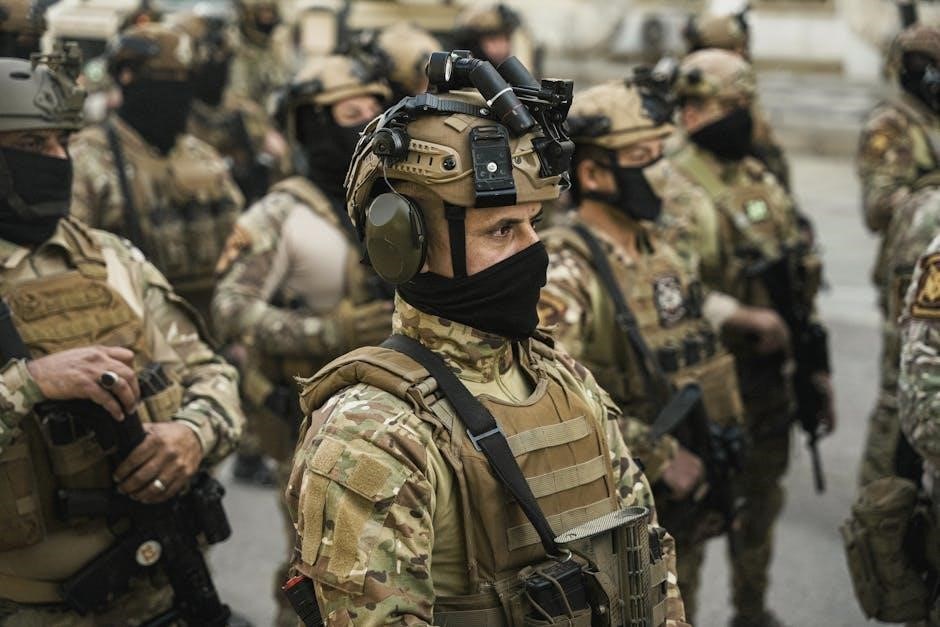
Terrain analysis is vital for small unit success; understanding the area of operations enhances protection and reveals enemy patterns, as detailed in resources.
Leaders must identify key terrain features and utilize them for cover, concealment, and to anticipate potential ambush or IED locations.
Terrain Association
Terrain association is the cognitive skill enabling leaders and soldiers to understand the relationship between terrain and military operations. It’s about mentally ‘living’ in the terrain, visualizing how it impacts movement, observation, and fields of fire.
Effective terrain association involves continuously comparing observed terrain features with maps, aerial photographs, and digital terrain models. This process builds a mental picture, allowing for accurate predictions of enemy actions and optimal route selection.
Leaders must train their units to recognize patterns – how the enemy historically utilizes specific terrain features for ambushes or IED placement. Resources like the SUTS2 emphasize that repetitive enemy tactics often exploit the same locations, making historical analysis crucial. Mastering terrain association significantly enhances situational awareness and survivability.
Identifying Key Terrain Features
Key terrain features are those that offer a significant military advantage to whoever controls them. These aren’t simply prominent landmarks, but areas impacting mission accomplishment. Identifying them requires analyzing how terrain affects observation, fields of fire, cover, and concealment.
Examples include high ground providing observation, defiles channeling movement, and obstacles hindering enemy advance. Understanding how these features influence both friendly and enemy capabilities is paramount.
Small unit leaders must train their soldiers to quickly recognize and classify these features during terrain analysis. Resources like tactical manuals emphasize that a thorough understanding of key terrain is vital for planning patrols, ambushes, and raids, directly impacting operational success and minimizing risk, as highlighted in SUTS2.
Utilizing Terrain for Cover and Concealment
Effective use of terrain for cover and concealment is fundamental to small unit survival and mission success. Cover provides protection from enemy fire – physical obstacles like walls or depressions. Concealment hides units from observation – vegetation, shadows, or terrain folds.
Mastering this skill minimizes exposure during movement, patrols, and defensive positions. Leaders must train soldiers to identify and exploit natural and man-made features.
Tactical manuals and resources like the SUTS2 emphasize that terrain analysis isn’t just about identifying key features, but also understanding how to use them to one’s advantage. Proper utilization reduces vulnerability to ambushes and IED attacks, increasing survivability and operational effectiveness, as noted in U.S. Army doctrine.
Small Unit Leadership
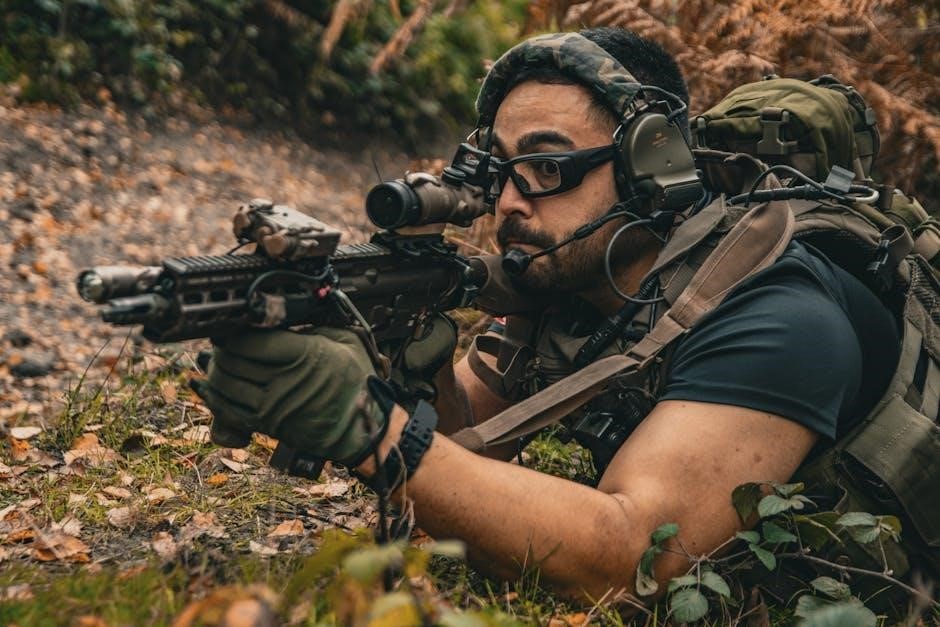
Effective leadership is paramount in small unit tactics, demanding proficient planning, decisive combat decision-making, and the ability to lead tactical operations successfully.
Leaders must leverage doctrine and training resources to maximize unit capabilities and achieve mission objectives.
Leading Tactical Operations
Leading tactical operations within small units requires a nuanced understanding of both doctrine and practical application, as detailed in resources like the Small Unit Tactics SMARTbook (SUTS2).
Successful leaders prioritize clear communication, decisive action, and the ability to adapt to rapidly changing battlefield conditions. They must effectively implement fire and movement techniques, ensuring coordinated maneuvers and maximizing combat effectiveness.
Furthermore, proficient leaders leverage mission command principles, empowering subordinates while maintaining situational awareness and control. This involves fostering initiative, encouraging risk assessment, and accepting prudent calculated risks.
Understanding the operations process, as outlined in ADP/ADRP 5-0, is also critical for effective planning and execution, ultimately contributing to mission success and minimizing casualties.
Planning Considerations
Planning for small unit tactics demands meticulous attention to detail, drawing upon resources like the SUTS2 and illustrated manuals for comprehensive guidance. A thorough terrain analysis is paramount, identifying key features for cover, concealment, and potential obstacles, influencing route selection and maneuver options.
Leaders must consider enemy capabilities, potential courses of action, and develop contingency plans to address unforeseen circumstances. Effective planning integrates fire and movement principles, ensuring synchronized attacks and defensive postures.
Furthermore, logistical requirements, communication protocols, and casualty evacuation procedures must be meticulously addressed. Adherence to current doctrine (ADP/ADRP 3-90, 5-0, 6-0) ensures plans align with established operational standards, maximizing mission success.
Decision-Making in Combat
Decision-making in combat, within the framework of small unit tactics, requires swift assessment and decisive action, informed by resources like the SUTS2 and practical manuals. Leaders must rapidly analyze the evolving battlefield, considering incomplete information and inherent uncertainties.
Mission command principles dictate empowering subordinates to exercise initiative and adapt to changing circumstances, while maintaining alignment with the overall objective. Effective communication and clear intent are crucial for facilitating timely decisions.
Leaders must weigh risks and benefits, prioritizing the safety of their soldiers while maximizing mission effectiveness. Utilizing established doctrine (ADP/ADRP 3-90, 5-0, 6-0) provides a framework for sound judgment and informed choices under pressure.
Doctrine and References
Key references include ADP/ADRP 3-90, 5-0, and 6-0, alongside resources like the Small Unit Tactics SMARTbook (SUTS2) and illustrated manuals.
These materials provide a comprehensive foundation for understanding and implementing effective small unit tactics in modern warfare.
ADP/ADRP 3-90: Offense and Defense
ADP/ADRP 3-90, covering Offense and Defense, is a cornerstone doctrine for small unit tactics, providing the framework for conducting successful combat operations; This publication details principles for both offensive actions – like raids and assaults – and defensive strategies, emphasizing adaptability and initiative.
It outlines how small units can effectively seize, retain, or defend key terrain, utilizing fire and movement as a primary tactic. The doctrine stresses the importance of understanding enemy capabilities and vulnerabilities to exploit weaknesses and achieve decisive results.
Furthermore, it integrates with Mission Command principles, empowering subordinate leaders to exercise disciplined initiative within the commander’s intent. Updated editions, like those found in SUTS2, incorporate the latest lessons learned and doctrinal refinements, ensuring relevance in the evolving operational environment.
ADP/ADRP 5-0: The Operations Process
ADP/ADRP 5-0, detailing The Operations Process, provides the overarching methodology for planning, preparing, executing, and assessing operations at the small unit level. It emphasizes a cyclical approach, moving through the stages of understand, decide, and do, continuously adapting to changing circumstances.

This doctrine is crucial for translating higher-level guidance into actionable plans for patrols, ambushes, and raids. It highlights the importance of thorough terrain analysis and understanding the enemy’s likely courses of action.
Effective implementation of this process, as detailed in resources like the SUTS2, enables small unit leaders to anticipate challenges, mitigate risks, and maintain the initiative. It reinforces the principles of Mission Command, fostering decentralized execution and empowering subordinates to achieve the desired effects.
ADP/ADRP 6-0: Mission Command
ADP/ADRP 6-0, focusing on Mission Command, is paramount to successful small unit tactics. It establishes a philosophy of empowering subordinate leaders with the intent and resources to execute operations, fostering initiative and adaptability on the battlefield.
This doctrine emphasizes clear commander’s intent, allowing for decentralized decision-making while remaining aligned with the overall mission objectives. Resources like the SUTS2 highlight how this translates to practical application during fire and movement or patrolling techniques.
Effective Mission Command requires mutual trust, shared understanding, and disciplined initiative. It’s a critical component of the operations process, enabling small units to overcome unforeseen challenges and exploit opportunities, ultimately enhancing operational effectiveness.
Resources and Manuals
Essential resources include the SUTS2, illustrated manuals, and the Tactical Manual, providing comprehensive guidance for mastering small unit tactics and operational procedures.
Small Unit Tactics SMARTbook (SUTS2)
The Small Unit Tactics SMARTbook (SUTS2), authored by Norman M. Wade and Christopher Larsen, is a highly regarded resource for both military personnel and those studying tactical operations. This second revised edition incorporates the latest Doctrine 2015 updates, ensuring alignment with current military thought.
Specifically, it integrates updates from ADP/ADRP 3-90 (Offense and Defense), ADP/ADRP 5-0 (The Operations Process), and ADP/ADRP 6-0 (Mission Command), alongside over 20 additional references.
Available through Amazon.com (ISBN: 9781935886280), the SUTS2 serves as a comprehensive guide, covering leading, planning, and conducting tactical operations at the small unit level. It’s designed for practical application and continuous learning.
Small Unit Tactics: An Illustrated Manual
“Small Unit Tactics: An Illustrated Manual”, penned by U.S. Army Special Forces Veterans Matthew Luke, is a valuable resource for mastering the art of employing soldiers in squads and platoons. Published on April 16, 2020 (ISBN: 9781734888003), this pocket book offers a practical, visually-rich approach to understanding tactical warfare.
Available on Amazon.com, it’s designed to be a user’s best guide, providing clear explanations and illustrations to enhance comprehension. Notably, the manual is also available in Spanish, French, and German, broadening its accessibility.
This manual focuses on the core principles of small unit operations, offering a concise yet comprehensive overview for soldiers and tactical enthusiasts alike.
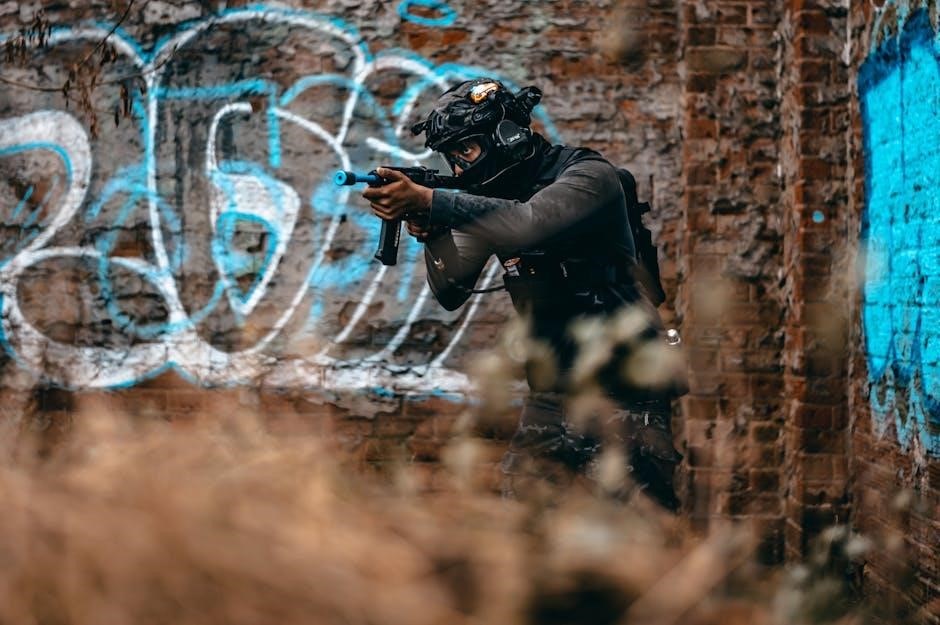
Tactical Manual: Small Unit Tactics
“Tactical Manual: Small Unit Tactics” (ISBN: 9781536876000), authored by Max Alexander and Max Velocity Tactical, serves as a comprehensive support tool for training and real-world operations of small tactical units.
Available through Amazon.com, the manual draws upon a diverse range of sources, integrating United States and British Army doctrine with proven best practices and lessons learned in the field.
The content is designed to be combat-focused, offering practical guidance for enhancing unit effectiveness. It aims to equip soldiers with the knowledge and skills necessary to navigate complex tactical scenarios, promoting proficiency and adaptability on the battlefield.